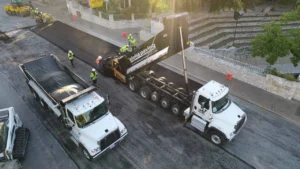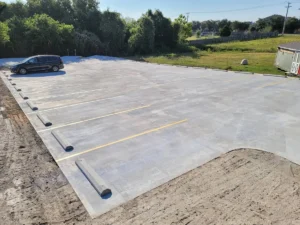
Your property’s concrete handles daily traffic, provides site access, and supports the areas that keep operations moving. But each surface has a different job. Every commercial concrete project has different demands, from new parking and access areas to accessibility improvements and repairs.
In this guide, we break down what commercial concrete construction involves and what to look for when planning projects across Houston, Dallas-Fort Worth, Austin, and San Antonio.
Common Commercial Concrete Projects
Two concrete surfaces on the same property may need to perform completely different jobs. One supports passenger vehicles all day, another takes delivery trucks, while a third gives pedestrians a route to the entrance. Here’s how those different applications shape the concrete projects you’ll find across a commercial site.
Concrete Parking Lots and Access Areas
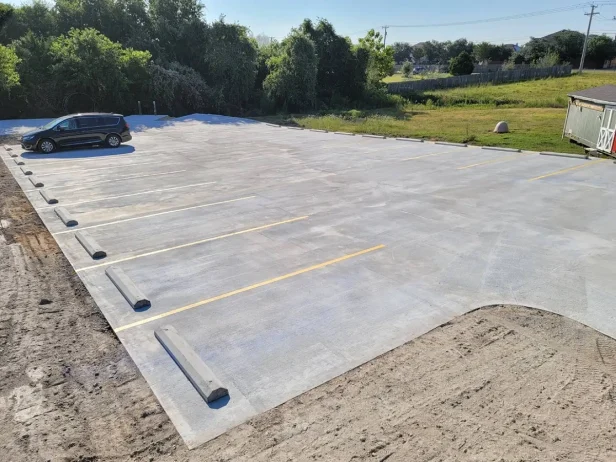
A parking area used mostly by passenger vehicles doesn’t withstand the same traffic as an access route handling heavy trucks or frequent deliveries. This difference affects how we approach the project’s subbase, reinforcement, drainage, and concrete slab thickness.
With existing parking areas, the work may be much more localized, especially when wear or damage is limited to certain sections. Our commercial parking lot repair and maintenance services assess where deterioration is happening and how much of the parking area needs attention.
Sidewalks, Walkways and ADA Concrete
Sidewalks and walkways have a simple job on paper: get people from one part of the property to another. But when you add ramps, landings, or curb transitions, the concrete also needs to meet a new accessibility standard.
For older properties, that may mean updating existing concrete, including ADA-compliant concrete ramps and curb cuts, when existing pedestrian routes require accessibility improvements
Commercial Slabs and Concrete Flatwork
Warehouse floors, loading areas, and equipment or dumpster pads all fall under commercial flatwork. But they don’t perform the same jobs. Forklifts place different stress on concrete than stationary equipment on a pad, so we plan flatwork around the weight and movement the area needs to support.
Concrete Curbing and Drainage Features
Concrete curbing handles several jobs around a commercial property, from separating traffic and landscaped areas to helping direct runoff. The curb’s purpose shapes where it belongs within the site’s pavement and drainage layout.
Specialty Concrete Pads and Site Features
A dumpster or equipment pad may take up only a small part of the property, but that area may experience concentrated weight and regular service traffic. What uses that space, and how often, helps determine pad construction.
Concrete Repair and Replacement
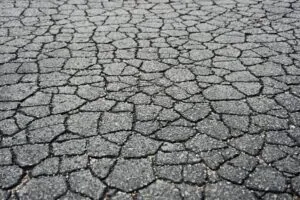
Cracking, spalling, settlement, and deteriorated joints don’t always tell the whole story from the surface. Two areas that look similar may call for very different work. We look at what caused the damage and how far it extends before recommending commercial concrete repair or replacement.
What Makes Commercial Concrete Different in Texas?
- Texas Soil Conditions: In parts of Texas, expansive soils swell as they take on moisture and shrink as they dry. Because concrete relies on the support beneath it, we assess the existing soil and subgrade before deciding how to prepare the site.
- Texas Heat and Weather: Texas heat affects how quickly concrete loses moisture and sets, especially in dry or windy conditions. We account for those conditions when timing placement and curing rather than treating the weather like an afterthought once work begins.
- Site and Access Requirements: Commercial properties must often stay active while concrete work is underway. Entrances, delivery access, existing pavement, and drainage all factor into how we phase the work and keep the site usable.
How to Know Which Commercial Concrete Service You Need
When determining the scope of your commercial concrete project, start by making a list of what you want to change around the property or what has failed:
- Add a parking area or access route that can handle the vehicles and traffic expected to use it.
- Improve pedestrian access with sidewalks, ramps, landings, or curb transitions that connect people safely through the property.
- Support heavy equipment or loading activity with slabs and flatwork built around those heavier demands.
- Use concrete curbing to define traffic areas, protect pavement edges, or direct runoff where it needs to go.
- Give dumpsters, equipment, or other site features a dedicated pad that can support their weight and regular service access.
- Evaluate cracking, settlement, spalling, or deterioration to see whether targeted repairs can address the damage or replacement makes more sense.
Choosing a Commercial Concrete Contractor in Texas
Working across Texas also means planning around conditions that vary from one market and property to another. At Alpha Paving, we work with commercial properties in Houston, Dallas-Fort Worth, Austin, and San Antonio and plan around your unique property rather than bringing the same assumptions to every jobsite. The rest of the property doesn’t stop operating while concrete work is underway. We maintain access around the work area while accounting for existing pavement and drainage.
Have a commercial concrete project coming up? Bring us what you know so far, even if you haven’t worked out every detail yet. Contact Alpha Paving, and we’ll help you develop a commercial concrete strategy for your property.
Commercial Concrete Project FAQs
What are examples of commercial concrete projects?
Commercial concrete projects include parking lots, sidewalks, loading areas, equipment pads, and other surfaces built for a property’s day-to-day use. They can also involve accessibility improvements, drainage features, or repairs to existing concrete. The specific project depends on how the area is used and what the concrete needs to handle.
How thick should commercial concrete be?
Thickness depends on expected traffic and loads, soil and subgrade conditions, reinforcement, drainage, and the surface’s intended use. A parking area serving passenger vehicles, for example, may have different requirements than concrete regularly carrying heavy trucks.
Can commercial concrete be repaired, or does it need to be replaced?
That depends on what is damaged and what caused it. Localized deterioration may be repairable, while issues like widespread cracking or settlement can point toward replacement. Evaluating the existing concrete and the conditions beneath it helps determine the best approach.